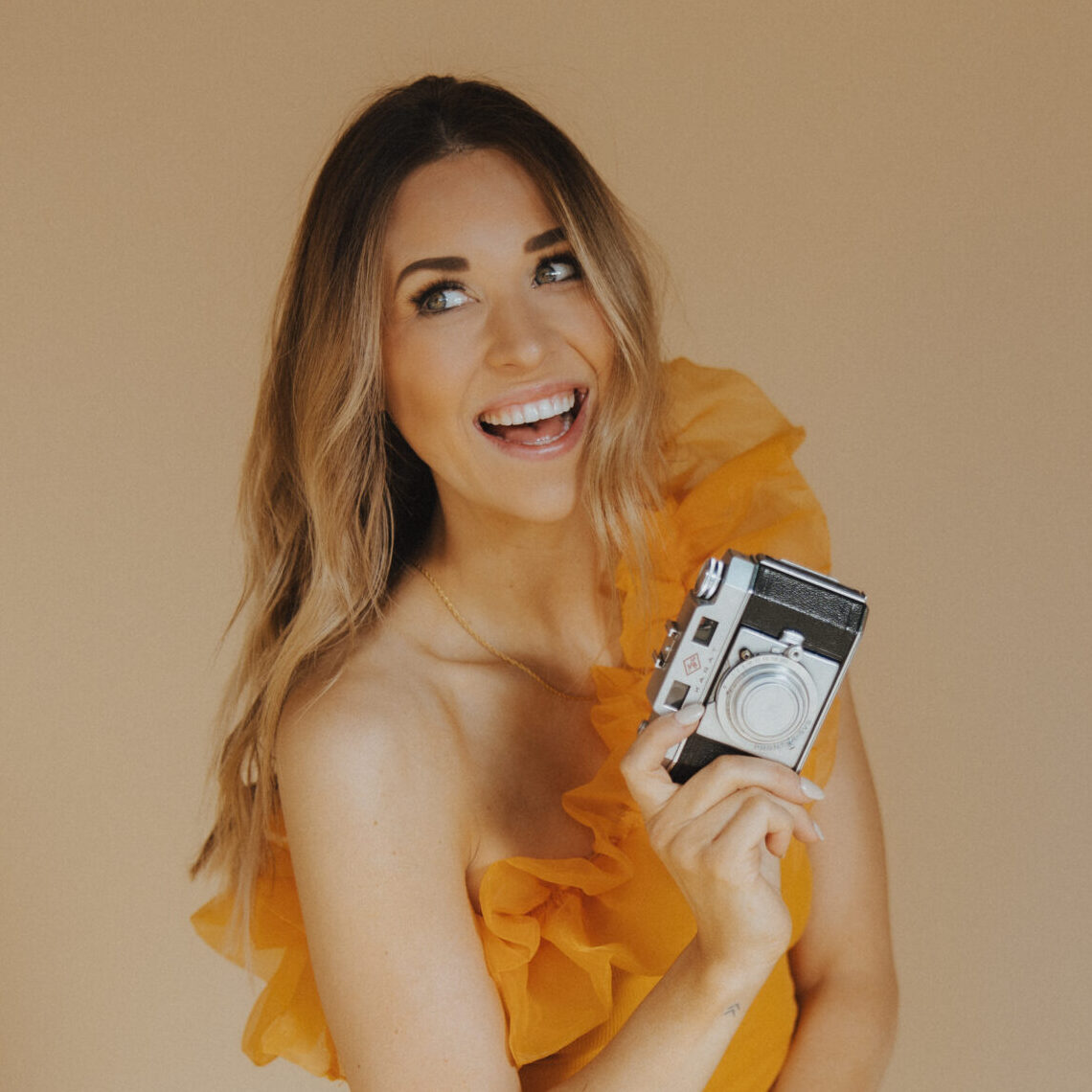


If you’re relying on Instagram to bring in clients, you’re one algorithm change away from a big problem.
In this episode, Rachel Traxler shares why you need a marketing strategy beyond social media, how to identify your most effective lead generators, and what systems to set up so your business attracts clients consistently without relying on IG reels.
Plus, for those of you who have a podcast (or are podcast curious), Rachel shares how she turned her show into her #1 lead generator. If podcasting isn’t your thing, we discuss plenty of other lead gen strategies, including in-person local marketing.
Rachel Traxler is a wedding and elopement photographer turned photography business coach, specializing in strategic marketing and sales funnels. With over 12 years and 200 weddings under her belt, Rachel has coached over 100 photographers. She’s a sought-after speaker, host of sold-out retreats, creator of celebrated digital products, and the voice behind That Photography Girl Podcast.
Click play to learn:
- How Rachel’s podcast became her #1 lead generator
- What it takes to stand out in a sea of podcasts and how to make your show unmissable
- The common SEO mistake that keeps your ideal clients from finding you (and what to do instead)
- Why you shouldn’t put all your eggs in the Instagram basket
- An unconventional local marketing strategy that’s pure genius (I’d never heard this before!)
Links & Resources
How do I get clients without relying on Instagram?
Build lead generators that don’t depend on an algorithm: a website people can find on Google, a channel that nurtures leads (like a podcast or email list), and real relationships with the businesses your clients already trust. Instagram can still have a role. It just doesn’t have to carry your whole business.
Treat Instagram as a first impression
If you’re in a visual field like photography, design, or videography, you might feel extra pressure to make social media your main thing. I don’t think that’s the case at all.
“I haven’t cared about my Instagram feed in so long, and it feels so freeing.” – Rachel Traxler
Instagram is a first glance at your work, so it’s worth keeping tidy. But you don’t need to dwell on it the way photographers used to. Rachel uses social media at the top of her funnel to point people toward the places where they get to know her better.
Get found on Google with location-specific keywords
SEO is Rachel’s #1 lead generator for her photography business. She’s based in Wisconsin, but she writes blog posts about specific locations and gets wedding inquiries from all over the U.S.
Her biggest tip: use the words people actually search. A lot of photographers fill their posts with adjectives, but nobody searches “warm fall engagement session.” They search for something like “Minneapolis, Minnesota engagement photographer.” Be specific about the location, the venue, and the service.
This works for online businesses too. Even if you work with clients anywhere, adding local keywords is an easy way to draw in more inquiries.
Use a podcast or email list to nurture leads
For Rachel’s coaching business, her podcast is her top lead generator and her highest converter. She sees it as the middle of her funnel: social media brings people in, and her podcast and email list nurture them toward her offers.
That middle step matters because of how people decide. After hours of listening, they already have a sense of what it’s like to be coached by her. Some of her students even show up already prepared for what she’ll ask!
Build in-person relationships by leading with service
Referrals, word of mouth, and meeting people face to face… it sounds so simple, but very few people are doing it. That’s exactly why it works.
Rachel goes to venues in person and offers something useful, like headshots for their team or content. For two venues, she created an album of her work for the coffee table, with a QR code on the last page that links to her contact page. Couples touring an empty reception space flip through it and see what their wedding could look like. She now gets more inquiries from those two venues than any others.
“The more virtual we go, and the more AI and automation is out there, the more connecting face to face becomes a rarity. And that’s now your ticket to standing out.”
Not a photographer? Look for businesses that serve your clients in a slightly different way, and ask what you can do for them before you ask for anything in return.
Set up your funnels before you focus on visibility
Whichever platforms you choose, people need somewhere to go once they find you.
“A lot of people do it backwards and focus on visibility first. You’re funneling people to a dead end.” – Rachel Traxler
Before you work on reach, set up clear next steps at a few levels: a freebie, a low-ticket offer, and a high-ticket offer. Building your funnel backward like this is what I teach my clients and students, because visibility on its own won’t bring in inquiries or booked calls.
The next step can be simple. Rachel shared a quick student win and invited people to reply with a heart emoji for details about her coaching program. An automated message sent the info, and she got 7 new applications in a day.
Key takeaways:
- Instagram can give people a first impression of your work, but you don’t need to rely on it for clients.
- Specific, location-based keywords help your ideal clients find you through search.
- A podcast or email list builds trust between someone discovering you and applying to work with you.
- In-person relationships that start with what you can offer bring in referrals most of your competitors miss.
If you’re ready to stop relying on Instagram for clients, my signature program Sales Liberation will help you generate consistent, 6-figure income with no social media. Check it out here!
FAQs: Getting Clients Without Instagram
Can I get clients without Instagram if my business is fully online?
Yes! Even an online business can use local SEO keywords and connect with business owners in its own area. You can work with clients anywhere in the world, but your local market is often an overlooked source of clients.
Do I need an expensive website to get clients without Instagram?
No. You don’t need to hire a $10,000 brand designer, but you do need a website with good SEO. That means using the keywords people search for and filling in the metadata on the back end of your website platform.
Can SEO help me get clients from AI search tools like ChatGPT?
It can. People are starting to use ChatGPT to find photographers and other service providers, and a website with strong domain authority makes you more likely to show up. The same SEO work that helps you rank on Google helps here too.
Got a takeaway, question, or story from this episode? We’d love to hear it—email us at podcast@megansmyth.com. You might even inspire a future episode!
Enjoyed this episode? A 5-star review only takes a moment and helps this show reach more women who need it.
Connect with Rachel
Rachel Traxler is a wedding and elopement photographer turned photography business coach. With over 12 years and 200 weddings under her belt, she’s coached over 100 photographers to simplify their processes, attract premium clients, and build sustainable businesses. She’s also a speaker, host of sold-out retreats, and the voice behind The Gold Biz Podcast.
You might also like:
- Referral Partnerships: How One Relationship Brought In Over $132k (+ How to Build Yours)
- How to Find Clients Without Social Media or Paid Ads: 7 Strategies Working Right Now
- How to Be Magnetic + Attract More Clients and Opportunities: 4 Key Traits to Embody
Full Transcript
[VA: add speaker labels]
[00:00:02] Welcome to the Blaze Podcast, where we’re all about tearing down barriers and building up community. My name is Meg and I’m a former pre-med student turned online business owner. I started this show because entrepreneurship can be lonely as hell sometimes. And I wanna remind you that no matter where you are on your journey, You are not in this alone. Our community is here to light the way, cheer you on and pour gasoline on your fire. Most importantly, we’re here to help you find your unique way of doing business because no advice is one size fits all. And the best strategy is the one that feels good to you. So whether you’re just getting started or you are already blazing your own trail, you’re in the right place, friend. Let’s get started.
[00:00:47] Hello and welcome back to the show. This is the first episode or episode. Not the episode itself, but the first introduction will say that I am recording from my new apartment in Edinburgh, Scotland. So if you notice a difference in the audio, that is why this little intro is going to be a quick test run to see how the audio turns out because the ceilings in this place are, I’m going to say like 12 to 14 feet high. So we will see how that turns out. I am in the Newtown area. If you’ve ever been to Edinburgh before, the Newtown is actually built in the Georgian period, the 1700s. So it’s still quite old, even though it’s the Newtown. I don’t know how old this building is specifically, but I’m going to say at least a couple hundred years old, hence the high ceilings.
[00:01:36] and all of the lovely historic charm I was looking for. So thank you so much to everyone who sent me well wishes for this move. I’m really excited. I’m still very early days, just settling in and seeing how it goes. I’m looking at this as an experiment because this will be the longest I’ve stayed in one place for the past couple years. And so we’ll see how it goes, right? I’m like, we’ll give it a couple of months and see if this is somewhere I want to stay more permanently or if it’s going to be a shorter term visit. So I have not done a whole lot of exploring because I’ve been to the city many, many times. So I’ve just been focusing on settling in. I’ve just been going for walks every day. The weather has been surprisingly beautiful and sunny.
[00:02:17] I’ve basically just been wandering around. listening to Life of a Showgirl on repeat and drinking flat white coffee. So which is what you do in the UK. If you haven’t been before, that is the life. So anyway, thank you so much for anyone who has checked in or wish me well on this move. Now, getting to today’s episode, this is a really good conversation. I had so much fun with today’s guest, Rachel Traxler. She is a wedding and elopement photographer turned photography business coach. So she now helps other photographers grow their businesses with over 12 years and 200 weddings under her belt. She scaled her photography business while preserving her signature warm client experience.
[00:02:58] She’s now coached over 100 photographers, empowering them with clear, actionable strategies to simplify their processes, attract premium clients, and build sustainable businesses. She’s also a sought-after speaker, host of sold-out retreats, and creator of the celebrated… Gold Biz Podcast. And as Rachel shares in this interview, her podcast is actually her number one lead generator. So we’re going to break down how that works, how it fits into her overall marketing and sales funnel, how she uses it to attract and convert new clients, and what she has done to stand out in the podcast space. Because let’s be real, everyone has a podcast these days, myself included. And that is an objection I hear from people is like, There’s so many podcasts. How do I come up with something original? How do I stand out and really attract an audience? I know a lot of you listening have a podcast or you’ve considered starting one.
[00:03:51] Maybe you’re just curious. So this is a great conversation to listen to today. But we’re not just talking about podcasting. We’re talking about lead gen and selling as a whole. So we’re talking about how to grow your client base beyond social media, unconventional and really fun lead gen strategies. in-person marketing, local marketing ideas, and so much more. So without further ado, here’s my conversation with Rachel. Rachel, thank you so much for being here. So excited to chat. I’m so pumped to be here. Yeah, it’ll be a fun conversation. Thanks for having me. Yeah, of course. Really excited. So before we dig in, why don’t we start with your, what I call your entrepreneur origin story. So how did you first get into photography? Maybe give us a quick overview of like what were you doing before? What led you to start your business?
[00:04:38] Yeah, I always love this too, just because I probably like a lot of other entrepreneurs and stuff. I don’t know. I didn’t have this path set for myself before I became a photographer. I’m a wedding photographer. I actually worked in the medical field. I worked in the cancer center at Mayo Clinic. And my disease group was gynecology, so I worked with women with ovarian cancer and stuff like that. And I was in pretty much like a windowless office following protocol. And also working in a very… not negative, but kind of a sad area of work as well, too. And so that was heavy. And so, but it’s just, it’s crazy because I’m an Enneagram type seven.
[00:05:19] So I feel like I’m just spontaneous and I like to be creative and kind of go with the wind in that sense. So I’m like… who I am as a person just didn’t align with working in a windowless office in the medical field, following protocol, it just wasn’t quite it. And my husband was like, you know, you really should just try this photography thing. Like, just go all in. Because it was always my intention. I’m like, I don’t want to go full-time photography because I want to keep my weekends open. from weddings. I want to keep them open with like friends and family. And but then he’s like, you should just try it. And I just kind of cold turkey went for it without a plan B. And honestly, I just never looked back. I kind of just made it work. And everyone always I feel like asks me when’s a good time to go full time or when time’s a good time to leave my job, my nine to five job.
[00:06:06] And I’m like, I’m probably the last person to ask because my advice would be just go for it and don’t have a plan B. Because when you don’t have a plan B and you don’t have a backup, you’re going to make it work. No matter, you’re just, you have to. That’s your only choice. You’re going to make it work. So I did that. I haven’t looked back. And yeah, that’s kind of a little gist of where I came from. Okay, Rachel, I have to say, I obviously, you know, I read your bio and your website, all the things about this interview, but I like to kind of be surprised in these conversations and hear it directly from you. There are so many parallels in our story. It’s actually crazy. I also worked in the medical field in cancer research for Cancer Care Ontario, and my disease group was women with ovarian cancer.
[00:06:49] Wow. Stop. I have full goosebumps. I worked in a windowless office, safe as you, inside the hospital. And I also quit my job with absolutely no backup plan of any kind, just full on leave. And I tell people the same thing. I’m like, you just got to go for it. Maybe that’s not the best example because I had no plan, but you figure it out. So I’m just like sitting here like, okay, wow. Okay, one more thing, one more thing. You’re probably like, wait, are you just reading my backstory? I was like, oh, I worked in the medical field, too. Oh, I worked in cancer care, too. Oh, and, yeah, so crazy. And then, Gaini. That is crazy, because I worked in research, too.
[00:07:29] So that is just great. We probably worked on the same clinical trials. We’re probably writing the same systematic reviews and guidelines and all the things. So that is… That’s wild. Megan, I love that. Yeah, we were meant to connect today, so… Obviously. Oh, my God. Yeah, I’m just kind of blown away with that. But anyway… We’re not here to talk about cancer care research, as exciting as that is too. So tell me, what was that journey like after you went all in on photography? How long were you doing that? And now you coach other photographers as well. What was that journey like? Yeah. And that’s the thing. I had quite the road from that. So I had three weddings booked when I quit. And then I went from like three weddings to like 33 weddings the next year. So I just went, I went for it. And I got, cause I was turning away a lot of work. Cause it was like my photography was really picking up. So I started with wedding photography. Loved that. That’s my bread and butter. I still shoot weddings. I love weddings. It’s where everything started for me.
[00:08:32] I then started to grow my team so I have an associate team as well that photographs like if I’m not available I have an associate team that photographs in other areas for me so I have some in just like different markets around my area so that kind of serves areas then I really just I love teaching people i’ve always been that person to help the next person in line i want to see like if someone’s struggling or if like someone’s underdog i’m always rooting for the underdog like that’s just how i’ve always been and so i almost just feel like a natural part of me was just to help the next person in line it’s like okay well i know this i wonder what my knowledge can serve other people with. So I really, I started, the very first thing I did was just a digital product.
[00:09:14] I just started with that to get my toes wet and in all that. And I loved it. And then that just started growing. I started doing more digital products. I started doing in-person products retreats and workshops and then I did my coaching program. So now I have, yes, my coaching program. And then that expanded into a podcast and all of the little adventure avenues, all of the things. Yeah. So, yeah, that’s kind of what I just of what I do. Yeah, so many parallels. I felt that same urge. What made you get into coaching and education? It’s like you have to have that passion for it and that desire. It just kind of evolves so organically, right? It’s like you start sharing that with other people.
[00:09:55] When you have success, of course, you want to pass that on. So I think that’s such a nice instinct to have and to celebrate. And now you get to share on the podcast and with your audience for free as well. So what role does podcasting play in… in your business? Like, when did the podcast come of the scene? When did you start doing that as well? I started my podcast in 2021, actually, the month that I had my first baby, which was kind of wild. Wow, busy month. I know. I know. Busy month. So I had all that piled up. And that was just really cool because I just started to realize I had so much to say. And especially as I was educating other photographers and photographers were coming to me with questions, and I realized, well, I actually have the answer for what they’re asking me, and I kind of know how to help them. I can…
[00:10:41] It’s kind of my gift, is I can really just look at someone’s business or see what they’re doing and just immediately pick what’s wrong. And I wonder how much that comes back to the cancer research to like picking up the deviations on things. I think the same thing is I notice like my clients and friends will say that that’s one of my strengths too is like I can just look and be like, oh, this is where the problem is. This is what you need to do to fix it. And I wonder if part of it is like that kind of like diagnosing and like finding the patterns and all those things. So it’s so funny. Yes. It’s so funny. And you gave me experience with, like, consent forms and all that stuff. Oh, yeah. And then just seeing, like, okay, now I’m gonna do, like, contracts, and if I have to make an amendment. And there’s so many things that I actually carried over from that job to, okay, I understand this.
[00:11:24] Oh, same. Yeah, so many people, like, new entrepreneurs, like, they feel so much imposter syndrome. Well, all entrepreneurs, especially women, do, right? But when you’re new, like, I don’t have the experience with this and that. I’m like, literally, whatever you were doing beforehand, whether you were a teacher, a stay-at-home mom, like, whatever it is, there is always… a thread, like you pick up those skills. Like, I mean, cancer research seems so entirely unrelated. But like you said, there’s so many things I noticed from kind of my past life in that medical world that serve me now in this business in like sales and psychology. And like, I think about all the risk of bias assessments that I did and understanding how people think and all that. Like there’s so much carryover. So, yeah, for sure. Oh my goodness, yes.
[00:12:04] Well, speaking of sales, how does my first question in terms of podcasting is where does that fit into your funnel? Like, how are you using podcasting in your business? Yeah. Okay. So I love podcasting because that is by far right now my top lead generator is podcasts. And my podcast, but then being another people’s podcast and stuff, too. It’s just, it’s really, really powerful. And what I love about that is, like, people feel like, they are getting a sense of what it’s like to be coached by you. Or they get a sense of your voice and your viewpoint on things and what you’re picking up. And I love that because then by the time someone comes to me, they’re like, they can almost anticipate maybe what I’m going to say to them.
[00:12:45] So I’ve even had some of my students say, OK, I know you’re probably going to ask for this. I already came with this prepared for you. cool like that even helps me help them more you know and so it’s like you really just get to know someone and it’s just been a huge blessing in my business because it’s brought me a lot of coaching photographers too so it’s been it’s been really cool Yeah. So we’re going to kind of walk through step by step from just starting a podcast to actually turning it into your primary lead generator, which I think is a goal for a lot of people. But obviously it takes time and strategy and all things to get to that point. So let’s start at the beginning. For the people listening to us who don’t have a podcast yet, or maybe like they just launched one and they’re totally new. Probably the two biggest objections I hear from people around podcasting are like the time that’s going to be done.
[00:13:29] commitment, which is real, by the way. Yes. But there are things you can do to help with that and manage it. And then the second one is that podcasting is so saturated. Everyone and their mother has a podcast these days, which is also true. But I actually don’t think like those two things are both true, but neither one should actually prevent you from starting a podcast. And I’m going to assume that you feel similarly. So I’d love to know your take on both of those. Yeah, and it’s just, we all, like we were just saying, we all have our different paths and walks of life. We all have our own gifts that we bring to the table. We all have just such beautiful minds in the way we think. And I’m just such a big, firm believer of just thinking.
[00:14:10] The more brains you can bring together, the more powerful things are. And so everyone’s going… Even if someone’s giving the same strategy or you think you’re hearing the same strategy over and over again of, oh, not relying on social media or just lead generation, whatever those hot topics are, everyone’s going to have a different way to do it, a different way to at least go about it, or at least a little bit of a different approach. And that’s the beauty of it, of just hearing everyone’s way and thinking. And I don’t know, the format, like, just the people’s format in the way that they do it is differently, too. Like, I love short and punchy episodes because I am a mother of two toddlers.
[00:14:52] I get it. I’m like, in and out. What do you want me to learn? Or like, what do you want to learn? I’m going to teach it to you in the shortest amount of time possible. But then you have people who like to just sit and chit chat for an hour, and, It’s nice, I think, to have a variety of those things, even within your own, because it’s going to serve different people. It’s almost like speaking to different buyer types, in a sense. Like, everyone consumes content different ways. Everyone makes purchasing decisions differently. And so when you can speak to those different, like, levels of people, I think that that’s… also really beneficial and will help you in the long run too. But yeah, everyone’s got their own approach to everything. Yeah, I agree. I like to mix it up in mine as well. And I think like that’s such an important takeaway for anyone considering like, oh, I feel like it’s all been done, right?
[00:15:35] Like, oh, there’s so many podcasts on marketing or whatever it is that you want to talk about. And it’s none of those are your podcasts. None of them are your unique perspective and experience and your personality and your voice and all of that. That’s what makes it a show that’s worth listening to. Like none of us are following. If you think about your favorite podcaster or like influencers that you follow, you’re not following them because like they’re the only person in the world who speaks about those topics. You’re following them for like who they are as a person because something in you connects with that or you find them entertaining or they’re really know their stuff or whatever it is, or someone you admire. So don’t let that stop you. I always tell my clients, the most valuable thing you can give your audience isn’t more content, it’s a new perspective.
[00:16:18] And that’s something they can only get from you, right? Yeah. And that’s why personal brand is so important. And yeah, I’m just even thinking within the photography industry, there’s so many photography podcasts and now there’s becoming a lot of educators in the photography space. And that is great. We need it. Every industry needs it. We need people to… be leaders in that sense. But also, you might just be drawn to someone else more. And yeah, if you think about… It’s not like you follow someone’s podcast. You’re like, oh, I like their… their setup or whatever. It’s like you just you like I really love your text setup. Yeah. Yeah. All those things that you think matter, right? You’re like especially when you’re first starting you’re like and not that it doesn’t matter but in terms of like ranking of what’s actually going to make you stand out and make people listen to you. So I would love to know like what do you think has maybe led to your your podcast success? Like do you hear from listeners like what makes them tune in? What makes them listen? Like what’s your opinion on?
[00:17:16] What’s led to that? I love that. I do think I will toot my own horn in saying that I do think I have a pretty solid brand and a solid personal brand. And I do think that people that come to me, they always are like, feel like I know you. You seem very warm and inviting. And then they get to meet me and they’re like, it’s exactly what I was expecting of you. And so I do think that’s really important when those things happen. click and they mesh. And if people are attracted to that and they feel drawn to it, then they’ll connect with it. I have gotten people say that they really love my short and punchy episodes. They love that because it’s quick, tangible. bite-sized action. But then also, I mean, as a consumer for me, sometimes I’m like, oh, that’s almost like information overload. I sometimes want to just turn something on and kind of half listen and just be entertained. And so it’s interesting what I put out isn’t necessarily what I like to consume in other people. But…
[00:18:10] That is interesting. Isn’t that interesting? Yeah. And I wonder if it’s because I do a lot of education and that’s kind of what I do, that to me, if I consume any or too much of it, it just becomes like information overload for me. It’s almost like I really just have to stay in my own lane. Like, I don’t listen to, I really don’t listen to other photography podcasts that much. There’s a couple that I’ll listen to, but the ones that I do, they’re more conversational. And maybe I’ll just like bits and pieces be like, okay, what are other people saying in my industry? Just so I kind of have an idea. But I really don’t like to listen to it because it’s just… It causes information overload in my head and just like extra noise and not imposter syndrome, but it kind of pulls me away from what I’m doing and centered into what I’m doing that I really like to stay grounded in that. And so that’s kind of how I just approach my own direction. And, and I just I do feel like people take a lot away from my podcast. And so that’s what I think people are drawn to in that.
[00:19:04] Yeah, I love that. I’m the same way. I listen to a ton of podcasts all the time, but I rarely listen to other business and marketing and sales ones specifically because I just find you’re right. It’s too much. It’s so—and then you’re comparing and you’re like, should I talk about this? Because they’re talking about that and all the things. So it’s enough to have a pulse on things without letting it kind of take over. So I would say to someone starting out as well, that’s something to consider. is do your research on the market and what else is out there. But there has to come a point where you’re like, okay, this is my show. Like what’s and create with people. So I would love to know. It sounds like a lot of it has evolved naturally just from your personal brand and people obviously connect with you. What was your intention going into starting the show or maybe some of like your growth strategies or like tips you would share from someone who’s just getting started or maybe they have a smaller show that they’re looking to kind of take to that next level?
[00:19:55] Yeah, and there’s so many things. But I do think it’s nice to have… Sometimes, not necessarily. You can start a podcast without knowing where it’s going or without having an end… goal in mind. But for me, I started because I’m like, I know I like education. I know I have a lot to say. I also have so many resources. I have a lot of digital products. I have my coaching. I have these workshops. I have a lot of avenues at all different levels that I can kind of funnel people to. And so if I can just use my voice to kind of market and hit on different topics and that, then I can easily more guide them into the direction that they want to go. So I knew essentially that would also help with my education space as well too and something that really has helped me I guess because if I’m trying to help get someone into like my coaching program or something that some content good content it’s always good to think about like belief shifting content and so not just like here’s the three things you should do, and I’m gonna tell you everything about them and everything you need to know.”
[00:21:01] But I can kind of expand their mind on, this is kind of why it’s important, this is what’s gonna happen if you don’t do it right. And all these things, not that they’re walking away being like, wow, I learned a lot and I’m gonna do this. But also, realizing, there is a lot to this, and probably I maybe do need some help with it. You know what I mean? So that kind of helps, too, but also just depends on what your end goal is in mind. Maybe you just want to sit and chit-chat and grow community. Maybe your goal is to grow community, and that’s your— the format of your podcast is going to look different, if that’s the case, too. Yeah, that’s such a good point with the educational content, because I think that’s where everyone’s go-to automatically when they sit down to record something or just create content in general.
[00:21:43] It’s like the how-to, here are the three steps, and this and that. And I think that has value, absolutely. But I do think that’s a trap people fall into, and I talk about this in my programs as well when we talk about content creation and marketing, is that it’s really easy to kind of tip over to people. the information overload when you’re doing how to and educational content. So like I tell people all the time, it’s like you’re focusing on what people need to do rather than step by step by step how. But a lot of times, people are focusing maybe on something that isn’t going to move the needle. Or they think they need to be doing this thing, and so they want the how-to content, but actually they need to be doing this other thing over here that they don’t even know about. And maybe that would be a better use of their time and all these things.
[00:22:23] There’s so many powerful things, like you said, in terms of shifting beliefs, or showing people even like, hey, you don’t have to worry about this thing. What about this instead? Or… here’s why you should be doing this in your business. Like that type of content can be really powerful rather than every week thinking through like, what step-by-step tutorial am I going to produce this week? Yes. Yes. Because like you said, information overload and actually that’s doing them such a disservice because, yeah, because you’re just immediately then putting them in overwhelm and then they’re associating you with just like overwhelm. And then maybe next time they see your podcast, they’re like, I’m not mentally ready. I don’t want to listen to that. You know what I mean? So it’s just there’s a fine line between it. And that’s kind of the approach that I like to take.
[00:23:03] Yeah. So I’m curious how you come up with episode ideas. Obviously, your show’s been running for years now. That’s a question I get a lot, too, is like, where do you come up with ideas? And for me, a lot of them come from questions that clients or audience members ask. So I’d love to know what’s your process for coming up with new ideas, planning content. Yeah. That is the same for me too. And this is what I do now is I have weekly coaching calls with my photography students in my coaching program. And I see either repeat questions or I see questions like new questions that are really good. And I’ll always just like make a running list on our coaching call days of questions. I’m like, those are good. And boom, I have like a million different topic ideas to go off of. But if you don’t have that, if you’re someone who’s just starting and trying to what to talk about. You even could do little series, break it into little series of just topics in general.
[00:23:56] Because I know when I first got started in education and all of that, I held myself back so much because I thought, whatever I put out first is what I’m going to be known for in my specialty. Forever. And that’s going to be my area of expertise forever. And it pushed me back from starting and pushed me back from actually doing it because I thought whatever I put out first is what I’m going to be known for. And… It just, it can evolve. So anything that you put out, just know that the ideas will start to swirl. People will start to ask questions. And honestly, nothing’s more valuable than your own voice and your own brain, too, because everyone thinks so differently. So don’t be afraid, I think, to just whatever you want to talk about, whatever you see is going on in your industry, things that are holding people back, you know, Struggles you’re seeing, honestly, even if you’re just doing market research and on social media, and you’re seeing a repeat topic over and over again, maybe it’s lead generation, maybe it’s phone calls, or maybe it’s content creation, whatever.
[00:24:59] That broader area, that’s a huge broad area. You can really hone in on different aspects of that. And heck, even ask ChatGPT, like, give me 25 content ideas under this content bracket or pillar, per se. And it just, the ideas will start to come. Especially as you start speaking, you start finding your voice, you start to see what people engage with and they react to, and it just comes. It comes naturally. And I think, too, the more that you create content or record episodes, the more ideas you’ll naturally have. And the more you’ll have an idea of what’s resonating with people as you start to hear from people, or people leave reviews or message you and whatnot, you will…
[00:25:41] have more than enough ideas. So I really, I hear that hesitation a lot. I feel like I’m worried I’m going to run out of things to talk about. And I’m like, I hear you, but you won’t like, trust me. I’m the same as you. I’m like, I have so much to say, but even if you don’t like, or you feel like that now, like if you sit down, like some people I’ve heard, you know, I’ve had clients who are like, I want to start a podcast. I’m going to map out like 50 episodes so that I know like I’m, good and I have this many topics and I’m like, you’ll be okay. If it feels good to have like five or 10 in the bank, do that. But you really, it will build and kind of snowball naturally as well. So that’s one fear I really don’t think most people have to worry about. And if you do happen to run out, I think the advice to go back to your audience and just spend more time kind of listing and observing, doing the research, that’s always going to steer you in the right direction.
[00:26:26] Yeah. And I think something that people, what I did in the beginning, don’t be afraid that if you have five to eight minute episodes, like that’s what I did right away too, because I was like, I like short and punchy. I’m just going to tell I’m going to get in and get out and make it quick. Or even if just a thought comes across your head one day, it’s okay to have really short, like mini-sodes in a sense too, of just off the cuff thoughts. And that’s okay. I think there’s no pressure to have these long episodes if you don’t want. For sure. Yeah, I know people whose their entire show is like those five minute episodes and that’s part of their brand is like you can get what you need or get a new perspective or hear some thoughts like in five minutes or less.
[00:27:06] There’s a market and audience out there for everything. So I think it’s finding a mix of like what works for you and what works for your audience. But part of that will be your style will naturally attract. the right people who resonate with that. So that’s such a good point, too. Yeah. Yeah. So I want to go deeper on lead gen because you mentioned, obviously, your podcast is primarily a generator. I think a lot of people, when they start podcasts, they would like to get it to that point, right? They’re like, I would love to have clients and leads finding me. through my podcast. So what does it look like for you strategically? Whatever direction you want to take this, like in terms of content planning or calls to action, like what are some things people should keep in mind if that’s what they want to build toward?
[00:27:46] Yeah, I love this question because when I think of lead generation for my business, I almost think of podcasting as like middle of funnel almost in a sense. Yeah, I do too. Because I… Because I feel like Top of Funnel is very social media and that’s easy. And then I’m funneling people to my podcast and then for my podcast, I’m funneling to my services. And I do feel like that’s maybe why I see such… It’s probably no surprise that why podcast is my highest lead generator and highest converter as well is because… It’s already there coming in. It’s a nurture. Yeah. It’s a nurture type of the stage there. And that conversion is a lot higher between top of funnel straight down to bottom.
[00:28:28] And so I really use… Instagram, social media, obviously, in general, like my email list. My email list, I would maybe kind of consider middle of funnel as well. I would say email list and podcast is maybe middle, but I really use my social media a lot for top of funnel stuff and then nurture them down into podcast and email and then into like my higher offers there. And so that looks like weekly posts or even like I just have on my story now it’s about to expire but it’s just a quick win from a student it’s just me saying what one of my students had so she just joined my coaching program I told her to do one small thing she made one small change she got three inquiries that same day for after she made the change and so I put that text over just a quick selfie of me and then I said DM or reply the just a heart emoji and I’ll send you the info. And I got dozens of people replying to that. And then I had a keyword automation set up to just send them info, like just a little quick message and info for my coaching page. Well, I got like seven new applications for new students just in a day, just from doing that. And so if you can put that on your content rotation, just to do it at least once a week, that’s, something like that that is super super beneficial or even just set up some social media funnels so that even on your instagram you’re utilizing the three pinned posts and the three pinned reels and those are all different levels of funnels coming in but they’re like a freebie funnel a low ticket funnel a high ticket funnel about you and an authority and then maybe another low ticket or another freebie if you have one then you can focus on visibility because then when you they’ll see those funnels, and then they’ll start going down those funnels, and it’ll all kind of make sense.
[00:30:17] So I feel like you have to have all those things lined up before you focus on visibility. Because I think a lot of people do it backwards and focus on visibility first. And then they come in, they’re like, well, nothing’s happening, I’m not getting any inquiries. I’m like, it’s because you don’t have anything set up. You don’t have, you’re funneling people to a dead end. You don’t have funnels. You’re only focusing on visibility and reach. for nothing because you don’t really have anything set up. So you got to do it backwards. Yeah, that’s exactly what I teach in my programs and working with my clients is building your funnel backward and in reverse because it doesn’t matter how visible you are. I’ve known those people are converting and actually like inquiring or booking calls. So I love the idea of like setting that foundation first. Obviously, Instagram and the podcast are big for you and you’ve kind of reverse engineered that. I know you also talk about marketing kind of beyond social and not relying on social for lead gen, which is something I talk about a lot on the podcast here as well.
[00:31:10] But I’d love to know your take on why service providers shouldn’t rely on Instagram, especially as a photographer, because I do hear, like, obviously what you do is so visual. And a lot of people, I think, especially in… those kind of visual creative fields like design, photography, videography, feel even more pressure to be like, well, I have to be on social or it has to be my primary thing. And I don’t think that’s the case at all. I think there’s lots of things you can do in those type of businesses, but I’d love to hear your take on that. I love this because, yes, we are in such a visual field as photographers and digital creators and content creators, all of those things. It is very visual. But I haven’t cared about my Instagram feed in for so long.
[00:31:52] And it feels so freeing. But also, I will say, we are in a visual field. So it is kind of like your first glance. Yeah. almost like first impression that way. So I say it is important, but it’s not… You don’t need to focus and dwell on it the way we used to have to. Especially if you’re a photographer, no matter what type of service provider you are. A website is so important. And I’m not saying you have to go hire a $10,000 brand designer and have everything perfectly set. But I am saying having a website is important and having good SEO is important. And SEO has changed so, so much within the last year. And now there’s so many… strategies and things you can do to also help build that that google domain the domain authority and then also to help you get like showing up on ChatGPT because people are starting to use ChatGPT to like photographers and places and like things like that.
[00:32:47] And so if you have good domain authority and all of that stuff, ChatGPT is like more likely to show you, but you build that authority through your website and all that stuff. And you having good SEO on your website, that’s my number one lead generator for my photography business. is SEO and Google. So I, where I’m based in Wisconsin, I get inquiries for everywhere because I travel a ton for photography too. And so I make blog posts about these specific locations and I places all over the U.S. based on my blogging and my SEO and all of that keywords and all of those things.
[00:33:27] And just making sure you’re using the right SEO and adding in that metadata on the back end of your website host. to make sure that you get showed up. So you have to kind of know what people are searching. You have to look at the competitiveness of the keywords and see where those rank and see where you’d be for that. But it is so, so important because that’s where I’m getting all of my wedding inquiries, basically like the most of them. And it’s one of those things, a lot of people with the SEO stuff, they’ll say, they’ll use adjectives in their blog posts or in their SEO. Yeah. Nobody’s searching that. You have to be very location-specific, venue-specific, just keyword-specific on what you’re doing, instead of adjective-focused. So instead of like, warm fall engagement session.
[00:34:11] It’s like, no one’s gonna be searching that. They are looking for, like, Minneapolis, Minnesota wedding engagement session. You know what I mean? Engagement photographer. Yeah. That’s what they’re searching. I think photographers especially, that’s probably, you know, what I hear across the board is SEO is their primary visibility strategy. It’s so effective, especially, I mean, not just photographers. The ones doing it right. local connection or even if you just want more local clients, right? Like even if you’re an entirely virtual business, that’s still an opportunity. Yes. Depending on where you are to incorporate more local SEO keywords. It’s such an easy thing you could do to just draw more eyes and generate more inquiries. So I love that. Beyond social, is there anything else that you are doing, any other strategies or platforms that you feel like are really effective in 2025, aside from social?
[00:34:59] Because people are always looking for alternatives, right? Like, okay, so we don’t want to rely on social, what else can we do? Yep. And yeah, because SEO is such like, it seems like a big daunting task and stuff. But honestly, in 2025, and just in today’s world, referrals and word of mouth is so, so powerful. And actually going and meeting people in person, going to, if you’re a photographer, going to venues, going to local businesses, connecting with other local business owners, It sounds so elementary and so simple, but no one’s doing it. And for me, when I started my business, it almost was opposite where in-person meetings and…
[00:35:40] Like for me doing consult calls with potential brides, we would actually go meet for coffee. Like it just wasn’t as digital as it was back then. And I feel like that’s so much more work and being digital and virtual has helped us a lot with saving time. But there are certain circumstances where I do think get out, go in person and meet people, schedule things. It makes the biggest difference. No one’s doing it, especially with younger people, like the younger generation, too. Being so digital, that will be so impressive if you just go and meet people in person and do all that stuff. And something that’s also worked really well for me, too, is That helps me get on preferred vendor lists, too, because I’m not just someone saying, hey, can I be on your preferred vendor list?
[00:36:23] Like, everyone’s asking. I’m going and meeting them in person. I’m offering them. Like, does your team need headshots? Do you need something? Do you want me to come in and do some content creation? Do you want me to create an album for your touring couples to come so that it’s on their coffee table when other couples go tour the venue, that they see my work in an album book on the coffee table, and then at the last page, it’s a QR code, to go to my contact page. Because they’re actually… Because the couple is actually in person at the venue looking at a blank open reception space. And then they open up this tangible album book and they’re like, oh, this is what this space could look like?
[00:37:03] Oh my goodness, this is the photographer who can make it look like this for us? It just really, it’s a tangible way of just connecting the dots and making people want to reach out. And I’ve gotten, there’s two venues that I do that with, and that’s, I get more inquiries for those two venues than anyone else. Yeah. Oh, I love this example. And I think it’s so like tactical, not just for photographers. I mean, building relationships is really what you’re talking about and referrals and word of mouth. I couldn’t agree more. I think that’s the era we’re in is kind of a back to basics and just like connecting with people, especially in real life and like face to face. Like the more virtual we go, the more AI and automation is out there, the more that becomes a rarity.
[00:37:44] Yes. And that’s now your ticket to standing out. I think there’s such opportunity there because, like you said, so few people are actually doing it. And I love your example. And for anyone listening who’s maybe like, I’m not a photographer, what do I do? Like, for venues. I mean, same thing applies, I think, like building those relationships and also like looking at who are your potential partners. So wedding photographer, obviously, the venue’s the potential partner. But maybe you’re a designer. Could you partner with someone? copywriter or like someone who offers what I call adjacent services or serves your potential clients in a slightly different way. Like how can you create those partnerships and not just like you said emailing them and being like hey can you add me to your list of preferred partners without doing anything for them in return but asking like what can I do for that person or or that business?
[00:38:32] How can I serve them? How can I boost their visibility, bring them more clients? What can I do for their clients to really elevate the service they’re already offering? And that type of thing, I think there’s so much opportunity there. Yeah, for sure. And I even just for an example, I just hired a social media manager and she’s actually local here. And even this morning, we went and met and we filmed some stuff in person. And that was so fun. And I had, I really wanted to find a local social media manager. And so if you’re a social media manager, like, you’re going to be a social media manager. you can reach out to photographers, hair salons, like, coffee shops, so many places, and just say, hey, is there a time that we can meet up and I can create three free reels for you to see if you like? And then, you know what I mean?
[00:39:13] And just start working there. Because you know what? I’ve… Today’s the first time I met my social media manager. Like, we just started together. And I’ve already referred her to someone else before I even met her today. So it’s like, once you get in with someone, same thing with hair salons. It’s like, there’s probably multiple people sitting in. The door’s open. And you just have to do it. And it really, I’m such a big believer. It’s all who you know. And it’s all about connections and the connections that you make. And you know what? You have to get out and go make the connections. Because… 9.999 out of 10 times, they’re not just gonna fall in your lap. Like, you have to go and make them happen. It’s such an overlooked point, though, I think, because I hear all the time people want more referrals, they want more inbound leads.
[00:39:54] They’re like, I wish people would just come to me. And I’m like, that’s great. Occasionally, that will happen. But nine times out of 10, it’s not gonna fall into your lap. You have to be proud. proactive about it. And the business owners who are really crushing it 2025, they’re not waiting for people to come and knock on their door. They’re getting out and being proactive and building those relationships, connecting with new people. And I love your example, social media too. I think literally no matter what service you offer, whether it’s coaching, social media, photography, design, whatever it is, is there an opportunity locally to connect with people? Because you’re is being able to connect in person or just like support other local entrepreneurs and other local businesses, right?
[00:40:38] Like I know, like I would love to connect with more Canadian business owners or wherever you are. I think there’s so much value in that. I think there’s a big opportunity is like if you’re running your business online, yes, you can work with anyone anywhere in the world and that’s wonderful, but have you ever thought of even exploring that local market? Yeah, local is really, really powerful. And also just one thing to add to that too is like, just do not be afraid of the word no. Like you’re gonna get it. And so you might get 99 no’s out of 100. But then that one yes leads to so many good things. And I think that’s something that I just, I don’t know, I’ve just been…
[00:41:18] I don’t know if I had to work at it. I kind of feel like it’s just come natural to me of like, I just don’t care if I get no for an answer. Like, it doesn’t bother me. I’m going to ask anyways. What’s the worst? I always say, what’s the worst I can say is no. What’s the worst could happen. That’s fine. I think so many people have, and if you’re listening and you have that fear of rejection, I really think the only way out of that is through. You just have to do it. It really is. When someone says no, you’re like, oh, yeah. Okay, thank you next, right? Like, that’s it. I didn’t die. The world didn’t come crashing down. And most people, like, even if they say no, no one is gonna, like, attack you for asking. Like, the worst-case scenario is, like, either you don’t hear back at all, which is fine, okay, people are busy, or they say, like, a polite thanks, but no thanks.
[00:42:00] No one’s gonna, like, come for you for asking, especially if you’re coming from that place of, like, just offering help or offering your services, right? Yeah. Yeah, if you’re coming from a place of serving them, not just, hey, I love your work. By myself. I’ve been dying, yeah, and I’ve been dying to do this, and this has been on my bucket list. It’s like, Cool. I mean, I’m not going to read that and be like, oh, it’s on her bucket list. I really should hire her. Like, I don’t, like, as humans, we naturally are what’s in it for us. And that’s kind of like, not in a selfish way, but you just have to lead with a serving heart. And so, like, how can you serve them that’s not a good thing? that’s going to connect with them a little bit more.
[00:42:40] And just because you got a no now doesn’t mean you won’t get a no later. There’s been so many opportunities that have come full circle for me and it didn’t happen this time, but I’m going to try again and it’s going to happen next time. So many. And so don’t just, if you get a no, give up on it either. Yeah, 100%. I think the fact that it’s like focusing on the other person is something I share with a lot of clients and students as well, because I think it takes that pressure off. We think it’s all about us, right? We’re like, oh, if they say no, like it’s, I’ve done something wrong, it means something about me. And I think if you can take that pressure off and just focus on how can I serve this other person? How could I help them? How could I benefit them and their business? That takes a level of the pressure off because you’re not coming from this place of like, I need to close a sale.
[00:43:21] Like, what can they do for me? Like, if… approaching someone or reaching out feels icky to you, I think like listen to that. Like don’t just ignore it. I think there’s some sales advice out there that are like, just do it anyway. Like push you out. I think if you’re feeling that there’s a reason and it’s either maybe the way you’re approaching it, maybe someone said you had to do it a certain way, but it doesn’t feel right for you. Like listen to that until you can find a way to do it that does feel good because that makes all the difference. Yeah, for sure. Totally agree. Yeah. Okay, as we start to wrap up here, I am curious, as someone who focuses on sales, I’d love to know. I’ve already got a little bit of an idea, but just to hear more about your relationship with sales and selling, because I think that is so important for all business owners.
[00:44:03] That’s… so so important and I honestly I do think I just have always come with a just a serving heart first and I just I look at it in a way of how am I serving people and that’s the way I look at my content I create it’s how I look at my wedding photography and the experience I get it’s how I look at my coaching program and all of that stuff and I just can focus on how the people are better or benefiting and how I’m serving them and focus on that. And I just don’t feel like I have to sell so much. You know what I mean? Because I’m just talking about how I’m serving them and how they feel working with me and what their wins are and what they’re getting from working with me, too.
[00:44:49] And it’s like it’s not it’s rewarding for me to. But me aside, it’s so cool to see other photographers, businesses and lives be blessed because of what I’ve been able to help them do. Or it’s just it’s awesome to see people really happy with their photos and love their experience and stuff like that. And that’s in terms of like my marketing and my content. That’s really what I focus on. And so I feel like it just kind of comes naturally when I lead with that. And even when I create content and stuff, it’s so much easier for me to create content when I’m making it about them, not me. You know what I mean? I always feel weird if I have content that’s more about me, because I’m just like, I don’t know.
[00:45:34] I don’t really, I don’t want it to be about me. I want it to be about… my clients or I want it to benefit them. And I think that’s why I like education so much, because it’s like, I feel good about the content I’m creating that’s education because people are, I’m serving people with that and they’re getting something out of it. And so honestly, I just think when you’re serving truly from your heart and you know that what you have to offer is blessing other people, it’s just not selling. You know what I mean? It’s just serving. It sells itself. Yeah, it’s so interesting, because I always think, like, when you’re selling well, it doesn’t feel like it at all. I think that’s, like, kind of the end goal. You know, it’s something I hear a lot of people are like, I want to sell, but I don’t want to be salesy.
[00:46:16] I’m like, what does that mean? But, like, that is really the heart of it. When people say selling is service, is everything… that you just said and if you can just focus on that and take that pressure off yourself of like needing to sell or needing to market and like how do I convince people or persuade them but instead focusing on that that’s you know what naturally leads to more inquiries more sales and all the things so yeah I love that it’s so beautiful it It will always feel icky if you’re just trying to persuade and convince. Like, that’s not what you should try to do. You should be so fully confident in what you do that… you’re just telling people what it is. Here it is. Take it or leave it. This is what I can do for you, and this is how I do it, and this is what people get from usually working with me, and this is the process.
[00:47:02] And when you’re confident in that, it’s just so much easier to say, like, yep, here’s the facts, and this is how much it is, and this is what I’ve got. If you want to, great. If you don’t, that’s totally fine, too. Like, I don’t take it personal. Yeah, exactly. It’s just like making an invitation, right? Like, that’s what I always say. It’s the invitation to the transformation. Like, whatever that end result is. And it’s not up to you whether they say yes or no. You’re just, like, you’re making the offer. Whether they say yes or no is totally up to them. But, like you said, it’s having that confidence in yourself and, like, the value that you’re offering that is so key. Yeah. And I think a lot of people get really emotionally attached to that. So if, like, they get a no, or people say, oh, you’re too expensive and all that stuff, people get really emotionally attached to that.
[00:47:45] Probably because we as service providers do lead with our heart, and what we do for our service is our art, it’s our craft, it’s our heart. We put a lot of emotion into that. And so when we hear no, that’s where sometimes artists and creatives can kind of take that personally. And I think… easier said than done but try to take yourself out of that because also you have to have a good mix of business and also creativity too and business decisions and things shouldn’t be personal like try to take your emotions out of it should be like data-driven and all of that stuff too so I, it’s easier said than done, but my advice is try to take the emotion out of it and don’t tie yourself and your value and your worth to if someone says no or it’s not a good fit, because that’s certainly not the case.
[00:48:32] A healthy sense of attachment, right? And I do think that comes naturally with time. It’s only natural to feel that like, oh my God, like they said, no, it’s all over. And that means something about me. That’s only natural. And the more that you are having those sales conversations, the longer you’re in business, the more you’ll start to realize that like, that actually doesn’t mean anything about me. That was just a decision that they made. Yes, exactly. And yeah, as soon as you can kind of like, piece that together. It’s like, okay, yeah, that makes sense. Yeah, yeah, absolutely. Oh my gosh. Rachel, I could literally talk to you about all the things all day. No, we could talk all day. We covered so much ground. I have like a million questions now about like our shared, like parallel lives that we had going on.
[00:49:13] First and foremost, please tell everyone, you know, where they can come find you, hang out with you, tell us about the podcast, like where people can connect with you online. Yes, I’d love that. You can find me at Rachel Traxler everywhere online, racheltraxler.com, racheltraxler on Instagram, TikTok, it’ll have all those things there. And I do really love business stuff, so as I’m a photographer, I just love business in general. It’s not always just geared towards photography. I also have a podcast, too. It’s called The Gold Biz Podcast. But I’m also recently, I’m going to be soonly switching and calling it That Photography Girl. So, but it is very business. I know, but there’s a lot of business stuff in there, too.
[00:49:54] It’s not all photography, so it’s got a little bit of everything. Yeah, I will say I was browsing your show before this interview, and there’s lots of your topics that I think will be applicable, regardless of whether or not you’re in photography, especially. Yes, agreed. Yeah, so, okay, I will make sure all those links are in the show notes so people can find them. Rachel, thank you so much for joining me. This was so much fun. Thank you. Thank you so much for having me. It was so much fun. Such a blast. Hey, Trailblazer. Thank you so much for listening to the show today. If you found this episode helpful, please help us spread the word so we can get more valuable, free content in front of more people who need it. Share this episode with a friend, post it on social, and tag me at saleswithmeg on Instagram. I would love to hear your biggest takeaways.
[00:50:38] Until next time, remember that fortune favors the bold, but success favors the stubborn. Keep going, friend. You got this.
Megan Smyth is a former pre-med student turned sales coach, podcaster, and full-time digital nomad. She helps women coaches and consultants grow their businesses to 6+ figures without social media or burnout.
Meet Your Host

Get Clients Now

Swipe my proven 3-step process to fill your pipeline with warm leads ASAP (no social media required),
